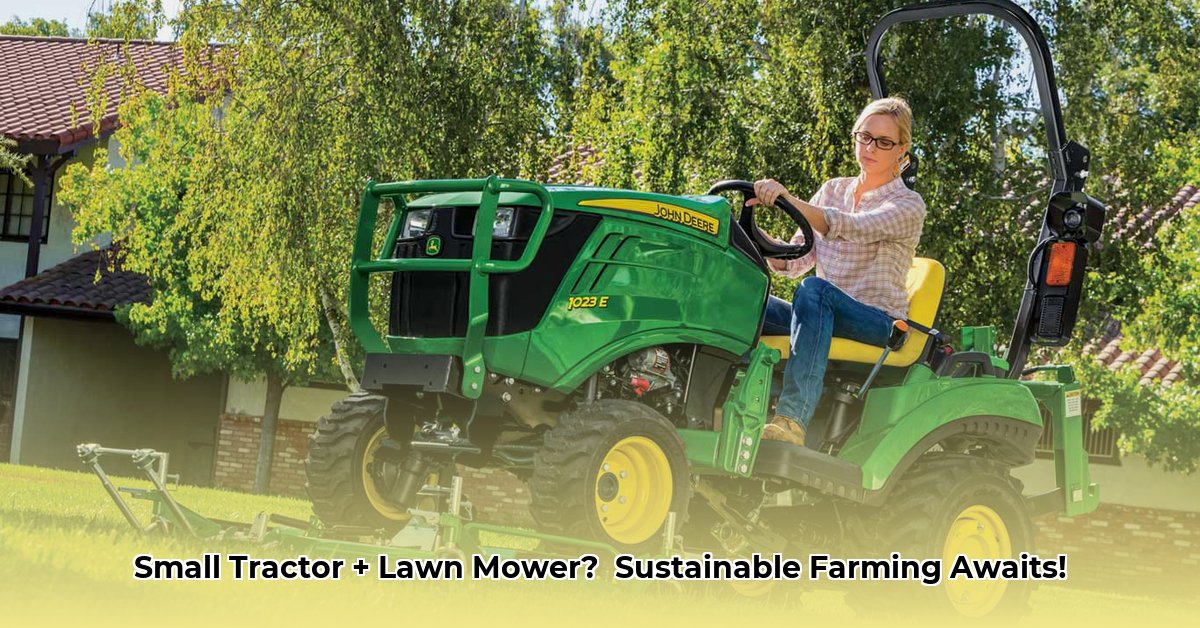
Choosing the right small tractor with a lawn mower is a significant investment impacting farm efficiency and environmental sustainability for years to come. This comprehensive guide helps you navigate the decision-making process, ensuring you choose the perfect machine for your needs. Learn more about tractor attachments to expand your tractor's capabilities.
Understanding Your Needs: Key Factors to Consider
Before exploring specific models, carefully assess your farming operation. What tasks will the tractor primarily handle? Will it be primarily for mowing, or will you need its versatility for tilling, plowing, hauling, or other chores? This will dictate the size, features, and horsepower requirements. Consider the size and complexity of your property; a larger property will likely require more powerful equipment.
1. Budgetary Considerations: Balancing Upfront and Long-Term Costs
The initial purchase price isn't the sole determining factor. A cheaper tractor might seem attractive upfront, but long-term operational costs must be factored in. Fuel consumption is critical – a less fuel-efficient model will cost substantially more over its lifespan. Maintenance is another significant expense; frequent repairs or expensive parts can negate any initial cost savings.
- Consider the total cost of ownership: Calculate the anticipated fuel, maintenance, and repair costs over the tractor's projected lifespan. This will give you a clearer picture of the overall financial commitment.
- Prioritize quality and durability: While a higher upfront investment might seem daunting, a more robust machine will likely require fewer repairs and replacements, thus reducing long-term expenses.
2. Fuel Efficiency: Environmental and Economic Impact
Fuel efficiency is paramount, both financially and ecologically. Seek tractors with modern, efficient engines. Manufacturers often publish fuel consumption data, enabling comparisons. Lower fuel consumption directly translates to reduced operating costs and a smaller carbon footprint. Even minor improvements in fuel economy accumulate significantly over the tractor's lifetime. Consider the type of fuel used; some options create lower emissions.
- Data driven decision-making: Compare fuel consumption figures from different manufacturers to make an informed choice. The difference in fuel costs over several years can be substantial.
3. Maintenance Requirements: Time, Money, and Downtime
Routine maintenance is crucial for keeping your tractor running smoothly and maximizing its lifespan. Evaluate the frequency and cost of routine servicing, parts replacement, and potential repairs. A tractor with simpler mechanics and readily available components will generally be cheaper and easier to maintain.
- Compare warranty terms: A longer warranty demonstrates the manufacturer's confidence in the product's reliability.
- Accessibility of parts: Easily accessible and affordable replacement parts will minimize downtime and repair costs.
4. Emission Levels: Minimizing Your Environmental Footprint
Sustainable farming practices emphasize minimizing environmental impact. Investigate the emissions produced by different models. Lower emissions directly equate to a smaller carbon footprint – a key aspect of responsible land management. While comprehensive emissions data may be limited for certain models, manufacturers increasingly provide this information. Choose tractors that meet or exceed relevant emission standards.
- Environmental stewardship: Selecting a low-emission tractor contributes to cleaner air and a healthier environment.
5. Power and Capability: Matching Horsepower to Your Needs
Small tractors are categorized by horsepower (HP), ranging from 15 to 75 HP. Higher horsepower allows handling more demanding tasks, but typically involves a higher price and potentially increased fuel consumption. Match your power needs to your anticipated workload. If primarily mowing, a lower HP tractor might suffice, while more strenuous activities like tilling heavy soil necessitate higher HP.
- Right-sizing your equipment: Overpowering your needs leads to unnecessary expenses, while underpowering creates inefficiency and frustration.
Types of Compact Tractors and Their Applications
Compact tractors exhibit various designs, but the mowing system and available attachments are usually the key differentiators.
1. Mowing Systems: Cutting-Edge Technology
Integrated mowing decks offer convenience and efficiency, varying in cutting width. A wider deck covers more ground per pass, increasing mowing speed. Consider your property's size and complexity; steeper slopes or irregularly shaped areas require a more maneuverable, smaller deck width.
2. Versatile Implements: Expanding Functionality
Many compact tractors allow attachment of diverse implements, extending their capabilities beyond mowing. Consider tilling, plowing, hauling, or snow removal depending on the attachments available. Prioritize implements that add the most value to your farming operations. Evaluate whether you require additional features like a front-end loader or a three-point hitch.
Sustainability: Beyond Fuel Efficiency
Choosing a fuel-efficient small tractor is a significant step towards sustainable farming, minimizing greenhouse gas emissions. Consider the tractor's lifespan – a durable machine reduces the need for frequent replacements, minimizing waste. Research manufacturers committed to environmental responsibility and transparency in their production processes.
- Long-term sustainability: Investing in a durable, efficient tractor reduces the long-term environmental impact of your operations.
Maintenance and Operational Costs: Long-Term Planning
Regular maintenance is imperative for longevity. Establishing a maintenance schedule, including oil changes, filter replacements, and regular inspections, prevents expensive repairs. Factor in the cost of parts and labor when budgeting. Maintaining a maintenance log aids in better financial planning and proactive maintenance.
- Proactive maintenance: Regular servicing drastically extends your tractor’s lifespan and reduces unexpected expenses.
Where to Buy and Learn More: Resources and Dealers
Reputable farm equipment dealers are valuable resources. Manufacturers' websites offer detailed specifications and resources. Compare models, pricing, service offerings, and warranty terms from numerous dealerships. Engage with online farming communities and forums where farmers share experiences and advice.
- Research and compare: Utilize multiple sources to ensure you make an informed purchase decision.
Key Considerations: A Summary
| Factor | Importance | Evaluation |
|---|---|---|
| Upfront Cost | Initial investment; balance against long-term operational expenses | Compare prices from diverse sources; consider financing options |
| Fuel Efficiency | Operating cost; environmental impact | Examine manufacturer specifications; consult independent reviews and ratings |
| Maintenance Needs | Long-term cost and operational downtime | Evaluate maintenance schedules; check parts availability and warranty strength |
| Emissions | Environmental responsibility | Seek out emission data; prioritize lower emission models |
| Power & Implement Versatility | Power needed for tasks; expansion of functionality beyond mowing | Match power (HP) to planned tasks; explore available attachments |
Purchasing a small tractor with a mower demands careful consideration of your needs, budget, and long-term goals. Thorough planning ensures choosing the best machine for your farm's efficiency and sustainability.